
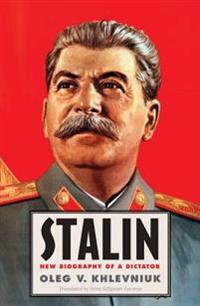
Stalin (Inbunden)
avOleg V. Khlevniuk, Nora Seligman (TRN) Favorov, Oleg V. Khlevniuk
ISBN: 9780300163889 - UTGIVEN: 2015-04Josef Stalin exercised supreme power in the Soviet Union from 1929 until his death in 1953. During that quarter-century, by Oleg Khlevniuk's estimate, he caused the imprisonment and execution of no fewer than a million Soviet citizens per year. Millions more were victims of famine directly resulting[...]
The Matiushin Case (Pocket)
avOleg Pavlov, Andrew (TRN) Bromfield, Oleg Pavlov
ISBN: 9781908276360 - UTGIVEN: 2014-07The Matiushin Case is one of the darkest and most powerful works of fiction to appear in Russian in the last twenty years. Deriving, like Captain of the Steppe (And Other Stories, 2013), from the author's own traumatic experience as a conscript in the last years of the Soviet Union, it follows the e[...]

Hidden Rituals & Public Performances (Häftad)
avAnna-Leena Siikala, Anna-Leena Siikala, Oleg Ulyashev, Oleg Ulyashev
ISBN: 9789522223074 - UTGIVEN: 201110Why are Khanty shamans still active? What are the folklore collectives of Komi? Why are the rituals of Udmurts performed at cultural festivals? In their insightful ethnographic study Anna-Leena Siikala and Oleg Ulyashev attempt to answer such questions by analysing the recreation of religious tradit[...]

Investing In Bric Countries (Inbunden)
avSvetlana Borodina, Oleg Shvyrkov
ISBN: 9780071664066 - UTGIVEN: 2010-03-01Chart a course for success in the fertile terrain of BRIC investing using S&P's own methodology "Investing in BRIC Countries" examines the risks in corporate governance in Brazil, Russia, India, and China. Without this vital information, those investing in these nations are almost doomed to fail. BR[...]

Flowers of Greece and the Balkans (Häftad)
avOleg Polunin
ISBN: 9780192819987 - UTGIVEN: 198704Almost 3,000 species of flowering plants are named or described and keyed in this, the third of Oleg Polunin's guides to the flowers of Europe. The author describes the 16 richest plant hunting areas from his own experience travelling in the area. The 461 colour photographs on 64 plates are suppleme[...]
Flowers of the Himalaya (Häftad)
avOleg Polunin, Adam Stainton
ISBN: 9780195644159 - UTGIVEN: 199812This book is a supplement to the definitive and widely-acclaimed Flowers of the Himalaya (1984) by Oleg Polunin and Adam Stainton. It contains some 350 species not previously described in the parent volume. In addition, over 600 new colur plates depict species described but not illustrated (or illus[...]
The Reasoned Schemer (Häftad)
avDaniel P. Friedman, William E. Byrd, Oleg Kiselyov
ISBN: 9780262562140 - UTGIVEN: 200511The goal of The Reasoned Schemer is to help the functional programmer think logically and the logic programmer think functionally. The authors of The Reasoned Schemer believe that logic programming is a natural extension of functional programming, and they demonstrate this by extending the functiona[...]

The Formation of Islamic Art (Häftad)
avOleg Grabar
ISBN: 9780300040463 - UTGIVEN: 198709This classic work on the nature of early Islamic art has now been brought up to date in order to take into consideration material that has recently come to light. In a new chapter, Oleg Grabar develops alternate models for the formation of Islamic art, tightens its chronology, and discusses its impl[...]

The Crown Jewels: The British Secrets at the Heart of the KGB Archives (Inbunden)
avNigel West, Oleg Tsarev
ISBN: 9780300078060 - UTGIVEN: 1999-04This lively account of Soviet intelligence activity in Great Britain from the close of World War I to the late 1950s is based on newly released documents from KGB archives-documents so highly valued they were dubbed the "crown jewels." Adding richly to our understanding of Soviet intelligence, this [...]

Islamic Art And Architecture, 650-1250 (Pocket)
avRichard Ettinghausen, Oleg Grabar, Marilyn Jenkins-Madina
ISBN: 9780300088694 - UTGIVEN: 2003-07-01- The Yale University Press Pelican History of Art Series

Stalin's "Iron Fist" (Inbunden)
avNaumov, Oleg V, Getty, JArch
ISBN: 9780300092059 - UTGIVEN: 2008-06-03Head of the secret police from 1937 to 1938, N. I. Yezhov was a foremost Soviet leader during these years, second in power only to Stalin himself. Under Yezhov's orders, millions of arrests, imprisonments, deportations, and executions were carried out. This book, based upon unprecedented access to C[...]

The Road to Terror: Stalin and the Self-Destruction of the Bolsheviks, 1932-1939 (Häftad)
avJ. Arch Getty, Oleg Naumov
ISBN: 9780300094039 - UTGIVEN: 200202This volume assembles and translates into English top secret Soviet documents from 1932 to 1939, the era of Stalin's purges.[...]

The Road to Terror (Pocket)
avJ. Arch Getty, Oleg V. Naumov, Benjamin Sher
ISBN: 9780300104073 - UTGIVEN: 201002Now updated with new facts, and abridged for use in Soviet history courses, this gripping book assembles top secret Soviet documents, translated into English, from the era of Stalin's purges. The dossiers, police reports, private letters, secret transcripts, and other documents expose the hidden inn[...]
Master of the House (Inbunden)
avOleg Khlevniuk
ISBN: 9780300110661 - UTGIVEN: 2008-12Based on meticulous research in previously unavailable documents in the Soviet archives, this compelling book illuminates the secret inner mechanisms of power in the Soviet Union during the years when Stalin established his notorious dictatorship. Oleg V. Khlevniuk focuses on the top organ in Soviet[...]

Triplex (Inbunden)
avNigel (EDT) West, Oleg (EDT) Tsarev, Nigel (EDT) West
ISBN: 9780300123470 - UTGIVEN: 2009-09TRIPLEX reveals more clearly than ever before the precise nature and extent of the damage done to the much-vaunted British intelligence establishment during World War II by the notorious "Cambridge Five" spy ring--Kim Philby, Donald Maclean, Guy Burgess, Anthony Blunt, and John Cairncross. The code [...]
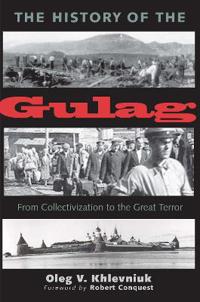
The History of the Gulag (Häftad)
avOleg V. Khlevniuk
ISBN: 9780300205039 - UTGIVEN: 2013-08The human cost of the Gulag, the Soviet labor camp system in which millions of people were imprisoned between 1920 and 1956, was staggering. Aleksandr Solzhenitsyn and others after him have written movingly about the Gulag, yet never has there been a thorough historical study of this unique and trag[...]
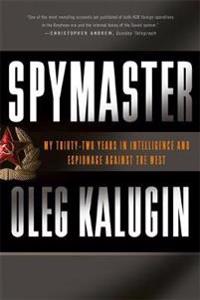
Spymaster (Häftad)
avOleg Kalugin
ISBN: 9780465014453 - UTGIVEN: 200902Oleg Kalugin oversaw the work of American spies, matched wits with the CIA, and became one of the youngest generals in KGB history. Even so, he grew increasingly disillusioned with the Soviet system. In 1990, he went public, exposing the intelligence agencys shadowy methods. Revised and updated i[...]

Self-Similar Processes in Telecommunications (Inbunden)
avAndrew Osin, Oleg Sheluhin, Sergey Smolskiy
ISBN: 9780470014868 - UTGIVEN: 2007-04-30
Linear and Nonlinear Multivariable Feedback Control: A Classical Approach (Inbunden)
avOleg Gasparyan
ISBN: 9780470061046 - UTGIVEN: 2008-02-29-
Self-Similar Processes in Telecommunications (Övrig)
avAndrew Osin, Sergey Smolskiy, Oleg Sheluhin
ISBN: 9780470062098 - UTGIVEN: 2007-05-31 -
Nonlinear Optics of Surfaces and Nanostructures (Häftad)
avGavrilenko, Vladimir, Aktsipetrov, Oleg
ISBN: 9780470397022 - UTGIVEN: 2013-09-30The chemistry, physics, and electron energy structure of simple atoms, molecules, and ideal crystals are fairly well understood, predictable, and no longer considered overly complex. The linear and, in particular, nonlinear optical properties are more challenging.[...]

Essential Computational Fluid Dynamics (Inbunden)
avOleg Zikanov
ISBN: 9780470423295 - UTGIVEN: 2010-03-31-
Linear and Nonlinear Multivariable Feedback Control: A Classical Approach (Övrig)
avOleg Gasparyan
ISBN: 9780470519172 - UTGIVEN: 2008-05-31 
Hedging Market Exposures: Identifying and Managing Market Risks (Häftad)
avOleg V. Bychuk, Brian Haughey
ISBN: 9780470535066 - UTGIVEN: 2011-09-30Identify and understand the risks facing your portfolio, learn how to quantify them, and how to choose the best tools to hedge these risks Written for the non-risk specialist, this book explains how to identify risks facing a portfolio, how to understand and quantify them, and how to choose the be[...]

Homogeneous Catalysis with Metal Complexes: Kinetic Aspects and Mechanisms (Häftad)
avOleg N. Temkin, P. P. Pozdeev
ISBN: 9780470666999 - UTGIVEN: 2012-03-31Presents a comprehensive summary of the results obtained in the field of the kinetics and mechanisms of organic and inorganic reactions catalyzed with metal complexes.[...]


