

A Companion to Walt Whitman (Övrig)
avEditor:Donald D. Kummings
ISBN: 9780470996812 - UTGIVEN: 2008-04-30
Value Investing: A Balanced Approach (Häftad)
avMartin J. Whitman
ISBN: 9780471398103 - UTGIVEN: 2000-10-31-

The Aggressive Conservative Investor (Häftad)
avMartin J. Whitman, Martin Shubik
ISBN: 9780471768050 - UTGIVEN: 200510"The Aggressive Conservative Investor will never go out of date. Regulation, disclosure, and other things may change, but the general approach and mindset to successful investing are timeless. Read this book and you will learn the rudiments of 'safe and cheap' investing. An essential read for every [...]
Selected Poems (Pocket)
avWalt Whitman
ISBN: 9780486268781 - UTGIVEN: 1991-05Generous sampling from Leaves of Grass. 24 poems include "I Hear America Singing," "Song of the Open Road," "I Sing the Body Electric," "When Lilacs Last in the Dooryard Bloom'd," "O Captain! My Captain!"--all reprinted from an authoritative edition. Alphabetical lists of titles and first lines.
[...]
Song of Myself (Häftad)
avWalter Whitman
ISBN: 9780486414102 - UTGIVEN: 200303It was with this first version of 'Song of Myself,' from the 1855 edition of Leaves of Grass, that Whitman first made himself known to the world. Readers familiar with the later, revised editions will find this first version new, surprising, and often superior to the revisions, and exhilarating in t[...]

Whitman and the Romance of Medicine (Övrig)
avRobert Leigh Davis
ISBN: 9780520207608 - UTGIVEN: 1997-08-28In this compelling, accessible examination of one of America's greatest cultural and literary figures, Robert Leigh, Davis details the literary and social significance of Walt Whitman's career as a nurse during the American Civil War. Davis shows how the concept of 'convalescence' in nineteenth-cent[...]

Erotic Whitman, The (Övrig)
avVivian R. Pollak
ISBN: 9780520221901 - UTGIVEN: 2000-08-04In this provocative analysis of Whitman's exemplary quest for happiness, Vivian Pollak skillfully explores the intimate relationships that contributed to his portrayal of masculinity in crisis. She maintains that in representing himself as a characteristic nineteenth-century American and in proposin[...]
-
Walt Whitman: The Song of Himself (Pocket)
avJerome M. Loving
ISBN: 9780520226876 - UTGIVEN: 2000-11-28 
Walt Whitman and the Civil War: America's Poet During the Lost Years of 1860-1862 (Övrig)
avTed Genoways
ISBN: 9780520259065 - UTGIVEN: 2009-09-15Shortly after the third edition of "Leaves of Grass" was published in 1860, Walt Whitman seemed to drop off the literary map, not to emerge again until his brother George was wounded at Fredericksburg, two and a half years later. Past critics have tended to read this silence as evidence of Whitman's[...]

The Cambridge Companion to Walt Whitman (Häftad)
ISBN: 9780521448079 - UTGIVEN: 1995-06The essays collected here, written for this volume by an international team of distinguished Whitman scholars, examine a variety of contemporary issues in Whitman?s life and art. Their varying approaches mirror the diversity of contemporary scholarship and the breadth of target that Whitman affords [...]
The Cambridge Introduction to Walt Whitman (Pocket)
avM. Jimmie Killingsworth
ISBN: 9780521670944 - UTGIVEN: 2007-03Walt Whitman is one of the most innovative and influential American poets of the nineteenth century. Focusing on his masterpiece Leaves of Grass, this book provides a foundation for the study of Whitman as an experimental poet, a radical democrat, and a historical personality in the era of the Ameri[...]

Leaves of Grass (Häftad)
avWalter Whitman
ISBN: 9780553211160 - UTGIVEN: 198306One of the great innovative figures in American letters, Walt Whitman created a daringly new kind of poetry that became a major force in world literature. Leaves Of Grass is his one book. First published in 1855 with only twelve poems, it was greeted by Ralph Waldo Emerson as "the wonderful gift . [...]
-
Poets Thinking: Pope, Whitman, Dickinson, Yeats (Pocket)
avVendler, Helen
ISBN: 9780674021105 - UTGIVEN: 2006-04-07Poetry has often been considered an irrational genre, more expressive than logical, more meditative than given to coherent argument. And yet, in each of the four very different poets she considers here, Helen Vendler reveals a style of thinking in operation; although they may prefer different means,[...]

The Verdict of Battle (Inbunden)
avJames Q. Whitman
ISBN: 9780674067141 - UTGIVEN: 201210Today, war is considered a last resort for resolving disagreements. But a day of staged slaughter on the battlefield was once seen as a legitimate means of settling political disputes. James Whitman argues that pitched battle was essentially a trial with a lawful verdict. And when this contained for[...]
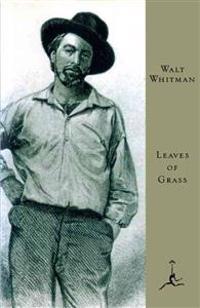
Leaves of Grass (Inbunden)
avWalt Whitman
ISBN: 9780679600763 - UTGIVEN: 199310This richly illustrated edition presents a selection of Whitman's greatest and most beautiful lyrics, from sprawling masterpieces like "Song of Myself" to little-known gems like "Fancies at Navesink." With poems drawn from each of the "clusters" with which Whitman brought structure and coherence to [...]

Walt Whitman's America: A Cultural Biography (Häftad)
avDavid S. Reynolds
ISBN: 9780679767091 - UTGIVEN: 1996-03In his poetry Walt Whitman set out to encompass all of America and in so doing heal its deepening divisions. This magisterial biography demonstrates the epic scale of his achievement, as well as the dreams and anxieties that impelled it, for it places the poet securely within the political and cultu[...]
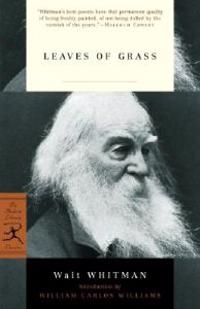
Leaves of Grass (Pocket)
avWalt Whitman
ISBN: 9780679783428 - UTGIVEN: 200012Abraham Lincoln read it with approval, but Emily Dickinson described its bold language and themes as "disgraceful." Ralph Waldo Emerson found it "the most extraordinary piece of wit and wisdom that America has yet produced." Published at the author's expense on July 4, 1855, Leaves of Grass inaugura[...]

On Whitman (Övrig)
avC. K. Williams
ISBN: 9780691144726 - UTGIVEN: 2010-03-29In this book, Pulitzer Prize-winning poet C. K. Williams sets aside the mass of biography and literary criticism that has accumulated around the work and person of Walt Whitman, and attempts to go back to "Leaves of Grass" as he first encountered it, to explore why Whitman's epic 'continues to inspi[...]

Worshipping Walt: The Whitman Disciples (Övrig)
avMichael Robertson
ISBN: 9780691146317 - UTGIVEN: 2010-02-21Despite his protests, Anne Gilchrist, distinguished woman of letters, moved her entire household from London to Philadelphia in an effort to marry him. John Addington Symonds, historian and theorist of sexual inversion, sent him avid fan mail for twenty years. And volunteer assistant Horace Traubel [...]

Walt Whitman's Guide to Manly Health and Training
ISBN: 9780752266329 - UTGIVEN: 2017-05TO YOU, IDLER. UP! Though your limbs may be corpulent and weary from your sedentary repose, your head a-thunder from an evening of indulgence, your spirit weary from the wretched nine-to-five - fret not, dear man, for within these pages are strategies to replenish and rejuvenate your manly health a[...]

Dialogue with the Past (Häftad)
avGlenn Whitman
ISBN: 9780759106499 - UTGIVEN: 2004-09Oral history is a marvelous force for empowering young people with a love of history. But educators today may wonder how they might use it to inspire their students while still teaching the necessary curriculum and meeting standards. In Dialogue with the Past Glenn Whitman addresses these concerns f[...]

Collecting State Quarters: And Related Coins (Häftad)
avWhitman Publishing
ISBN: 9780794820152 - UTGIVEN: 2006-08