
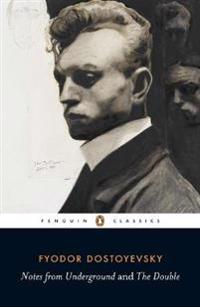
Notes from Underground and the Double (Storpocket)
avFyodor Dostoyevsky
ISBN: 9780140455120 - UTGIVEN: 200901Collected here in "Penguin Classics" are two of Fyodor Dostoyevsky's shorter works, "Notes from Underground and The Double", translated by Ronald Wilks with an introduction by Robert Louis Jackson. Alienated from society and paralysed by a sense of his own insignificance, the anonymous narrator of D[...]

The Grand Inquisitor (Häftad)
avFyodor Dostoyevsky
ISBN: 9780141043920 - UTGIVEN: 200908Vividly imagining the second coming and capture of Christ during the time of the Spanish Inquisition, this parable recounted in "The Brothers Karamazov" is a profound, nuanced exploration of faith, suffering, human nature and free will. Included here too are Dostoyevsky's powerful and disturbing wri[...]
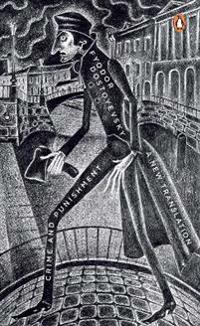
Crime and Punishment (Häftad)
avFyodor Dostoevsky
ISBN: 9780141192802 - UTGIVEN: 2014-02"Will I really - I mean, really - actually take an axe, start bashing her on the head, smash her skull to pieces?...Will I really slip in sticky, warm blood, force the lock, steal, tremble, hide, all soaked in blood ...axe in hand?...Lord, will I really?' This new translation of Dostoevsky's 'psycho[...]

The Little Demon (Pocket)
avFyodor Sologub, Ronald (TRN) Wilks, Pamela (INT) Davidson
ISBN: 9780141392936 - UTGIVEN: 2013-12A dark classic of Russia's silver age, this blackly funny novel recounts a schoolteacher's descent into sadism, arson and murder. Mad, lascivious, sadistic and ridiculous, the provincial school teacher Peredonov torments his students and has hallucinatory fantasies about acts of savagery and degrada[...]
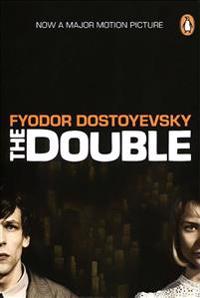
The Double (Häftad)
avFyodor Dostoyevsky
ISBN: 9780141396187 - UTGIVEN: 2014-03This is an official tie-in edition to accompany Richard Ayoade's brilliant new film based on Dostoyevsky's deliciously dark and slyly funny novel. The Double stars Oscar nominee Jesse Eisenberg (The Social Network) and Mia Wasikowska (Jane Eyre) with support from Chris O'Dowd, Sally Hawkins, Paddy C[...]

The Meek One (Häftad)
avFyodor Dostoyevsky
ISBN: 9780141397481 - UTGIVEN: 2015-02'I could see that she was still terribly afraid, but I didn't soften anything; instead, seeing that she was afraid I deliberately intensified it.' In this short story, Dostoyevsky masterfully depicts desperation, greed, manipulation and suicide. Introducing Little Black Classics: 80 books for Pengui[...]
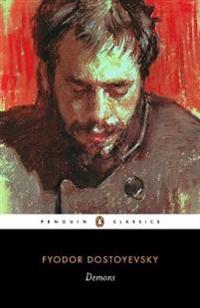
Demons (Pocket)
avFyodor Dostoyevsky, Robert A. (TRN) Maguire, Ronald (EDT) Meyer
ISBN: 9780141441412 - UTGIVEN: 2008-06"Demons", also known as "The Possessed" or "The Devils", is a dark masterpiece that evokes a world where the lines between and good and evil long ago became blurred. This "Penguin Classics" edition of Fyodor Dostoyevsky's "Demons" is translated by Robert A. Maguire and edited by Ronald Meyer, with a[...]
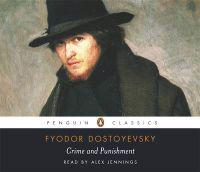
Crime and Punishment (CD-bok)
avFyodor Dostoyevsky
ISBN: 9780141804507 - UTGIVEN: 2003-01Raskolnikov, a destitute and desperate former student, wanders through the slums of St. Petersburg and commits a random murder without remorse. He imagines himself to be a great man, a Napoleon: beyond conventional moral law. But as he embarks on a dangerous game of cat and mouse with a suspicious p[...]
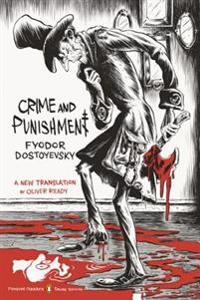
Crime and Punishment (Häftad)
avFyodor Dostoyevsky, Zohar Lazar
ISBN: 9780143107637 - UTGIVEN: 2015-07A truly great translation. . .This English version . . ." "really is better. A. N. Wilson, "The Spectator"
This acclaimed new translation of Dostoyevsky s psychological record of a crime gives his dark masterpiece of murder and pursuit a renewed vitality, expressing its jagged, staccato urgency [...]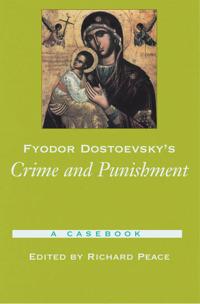
Fyodor Dostoevsky's Crime And Punishment
ISBN: 9780195175622 - UTGIVEN: 2005-11This Casebook is a collection of interpretations of Crime and Punishment. The selection not only reflects earlier work by major critics in the field, but also more recent studies. At the same time the choice of critical approaches has been made on the basis of covering the novel's various aspects: D[...]
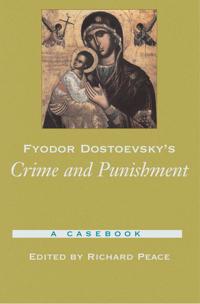
Fyodor Dostoevsky's Crime And Punishment (Pocket)
avRichard (EDT) Peace
ISBN: 9780195175639 - UTGIVEN: 2005-11This Casebook is a collection of interpretations of Crime and Punishment. The selection not only reflects earlier work by major critics in the field, but also more recent studies. At the same time the choice of critical approaches has been made on the basis of covering the novel's various aspects: D[...]

Crime and Punishment (Häftad)
avFyodor Dostoyevsky
ISBN: 9780199536368 - UTGIVEN: 200806Crime and Punishment is the story of a murder committed on principle, of a killer who wishes by his action to set himself outside and above society. A novel of fearful tension, physical, and psychological, it is pervaded by Dostoevsky's sinister evocation of St Petersburg, yet in the life of its gl[...]

The Karamazov Brothers (Häftad)
avFyodor Dostoyevsky
ISBN: 9780199536375 - UTGIVEN: 200806Dostoevsky's last and greatest novel, The Karamazov Brothers (1880) is both a brilliantly told crime story and a passionate philosophical debate. The dissolute landowner Fyodor Pavlovich Karamazov is murdered; his sons - the atheist intellectual Ivan, the hot-blooded Dmitry, and the saintly novice [...]
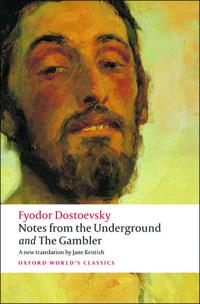
Notes from the Underground (Häftad)
avFyodor Dostoyevsky
ISBN: 9780199536382 - UTGIVEN: 200806Notes from the Underground (1864) is one of the most profound works of nineteenth-century literature. A probing, speculative book, often regarded as a forerunner of the Existentialist movement, it examines the important political and philosophical questions that were current in Russia and Europe at [...]

The Idiot (Pocket)
avFyodor Dostoyevsky, Alan Myers, William Leatherbarrow
ISBN: 9780199536399 - UTGIVEN: 200808Into a compellingly real portrait of nineteenth-century Russian society, Dostoevsky introduces his ideal hero, the saintly Prince Myshkin. The tensions subsequently unleashed by the hero's innocence, truthfulness, and humility betray the inadequacy of his moral idealism and disclose the spiritual em[...]

Memoirs from the House of the Dead (Pocket)
avFyodor Dostoyevsky
ISBN: 9780199540518 - UTGIVEN: 2008-08-01In this almost documentary account of his own experience of penal servitude in Siberia, Dostoevsky describes the physical and mental suffering of the convicts, the squalor, the degradation, in relentless detail - even down to the intricate procedure whereby the men strip for the bath without removin[...]


The Idiot (Häftad)
avFyodor M. Dostoevsky
ISBN: 9780375702242 - UTGIVEN: 200307Prince Myshkin, a good yet simple man, is out of place in the corrupt world obsessed by wealth, power, and sexual conquest created by Russia's elite ruling class, as he becomes caught in the middle of a violent love triangle with two women who become rivals for his attention. Reprint. 12,500 first p[...]
The Brothers Karamazov (Häftad)
avFyodor Dostoyevsky
ISBN: 9780393926330 - UTGIVEN: 2011-05This second edition is based on a significantly revised translation by Susan McReynolds. It is accompanied by a detailed introduction, a pronunciation and explanation key for the novel's main characters, and greatly revised and expanded explanatory annotations.[...]
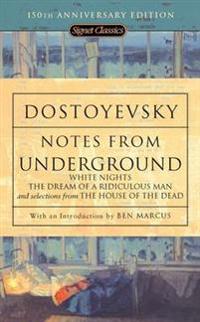
Notes from Underground: 150th Anniversary Edition (Pocket)
avFyodor Dostoyevsky, Ben Marcus
ISBN: 9780451529558 - UTGIVEN: 200411A collection of powerful stories by one of the masters of Russian literature, illustrating the author's thoughts on political philosophy, religion and above all, humanity.
[...]
Crime And Punishment (Pocket)
avFyodor Dostoyevsky
ISBN: 9780451530066 - UTGIVEN: 2006-03-07Determined to overreach his humanity and assert his untrammelled individual will, Raskolnikov, an impoverished student living in the St. Petersburg of the Tsars, commits an act of murder and theft and sets into motion a story which, for its excrutiating suspense, its atmospheric vividness, and its p[...]

The Brothers Karamazov (Pocket)
avFyodor Dostoyevsky, Manuel Komroff
ISBN: 9780451530608 - UTGIVEN: 200712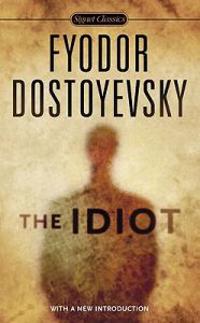
The Idiot (Pocket)
avFyodor Dostoyevsky
ISBN: 9780451531520 - UTGIVEN: 201004A classic by a Russian master
Prince Myshkin, the idiot, is an almost comically innocent Christ figure in a land of sinners, one whose faith in beauty contrasts sharply with that of his society's.
[...]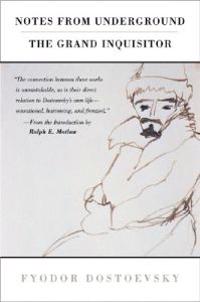
Notes from Underground and the Grand Inquisitor (Häftad)
avFyodor Mikhailovich Dostoevsky
ISBN: 9780452285583 - UTGIVEN: 2003-11"The connection between these works is unmistakable, as is their direct relation to Dostoevsky's life--sensational, harrowing, and frenzied."
--From the Introduction by Ralph E. Matlow
[...]


