The City in the Roman West, c. 250 BC - c. AD 250 (Pocket)
avRay Laurence, Simon Esmonde Cleary, Gareth Sears
ISBN: 9780521701402 - UTGIVEN: 201108The city is widely regarded as the most characteristic expression of the social, cultural and economic formations of the Roman Empire. This was especially true in the Latin-speaking West, where urbanism was much less deeply ingrained than in the Greek-speaking East but where networks of cities grew [...]
The City in the Roman West c.250 BC-c.AD 250
ISBN: 9780521877503 - UTGIVEN: 2011-08The city is widely regarded as the most characteristic expression of the social, cultural and economic formations of the Roman Empire. This was especially true in the Latin-speaking West, where urbanism was much less deeply ingrained than in the Greek-speaking East but where networks of cities grew [...]

Augustan Succession, The: An Historical Commentary on Cassius Dio's Roman History Books, 55-56 (9 B.C.-A.D. 14) (Inbunden)
avPeter Michael Swan
ISBN: 9780195167740 - UTGIVEN: 2004-03-01
Roman Social Relations, 50 B.C. to A.D. 284 (häftad)
ISBN: 9780300027020 - UTGIVEN: 1981-09"In this interesting and suggestive book, Professor MacMullen views anew an important and rather neglected aspect of Roman social relations. A perceptive and sensitive interpreter, he has drawn widely upon the scattered and unorganized evidence about the poorer classes, rural and urban, in much of t[...]
The Roman History of C. Velleius Paterculus, Tr. by T. Newcomb (häftad)
ISBN: 9780341726180 - UTGIVEN: 2018-10
Final Judgments: Duty and Emotion in Roman Wills, 200 B.C.-A.D. 250 (Övrig)
avEdward Champlin
ISBN: 9780520071032 - UTGIVEN: 1991-06-13Freed from the familial and social obligations incumbent on the living, the Roman testator could craft his will to be a literal 'last judgment' on family, friends, and society. The Romans were fascinated by the contents of wills, believing the will to be a mirror of the testator's true character and[...]

Temples and Towns in Roman Iberia: The Social and Architectural Dynamics of Sanctuary Designs from the Third Century B.C. to the Third Century A.D. (Övrig)
avWilliam E. Mierse
ISBN: 9780520203778 - UTGIVEN: 1999-10-27This is the first comparative study of Roman architecture on the Iberian peninsula, covering six centuries from the arrival of the Romans in the third century B.C. until the decline of urban life on the peninsula in the third century A.D. During this period, the peninsula became an influential cultu[...]

Looking at Lovemaking: Constructions of Sexuality in Roman Art, 100 B.C.-A.D.250 (Övrig)
avJohn R. Clarke
ISBN: 9780520229044 - UTGIVEN: 2001-04-16What did sex mean to the ancient Romans? In this lavishly illustrated study, John R. Clarke investigates a rich assortment of Roman erotic art to answer this question--and along the way, he reveals a society quite different from our own. Clarke reevaluates our understanding of Roman art and society [...]

Looking at Laughter: Humor, Power, and Transgression in Roman Visual Culture, 100 B.C.-A.D. 250 (Övrig)
avJohn R. Clarke
ISBN: 9780520237339 - UTGIVEN: 2007-11-17In this engaging study, a follow up to his earlier Looking at Lovemaking John R. Clarke asks what the Romans found funny, and why. As the title would suggest, he focuses on the evidence to be found in Roman art and material culture, including graffitti, although literary sources of course provide [...]
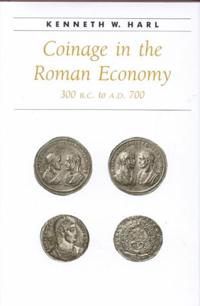
Coinage in the Roman Economy, 300 B.C. to A.D. 700
ISBN: 9780801852916 - UTGIVEN: 1996-06The premier form of Roman money since the time of the Second Punic War (218-201 B.C.), coins were vital to the success of Roman state finances, taxation, markets, and commerce beyond the frontiers. Yet until now, the economic and social history of Rome has been written independently of numismatic st[...]
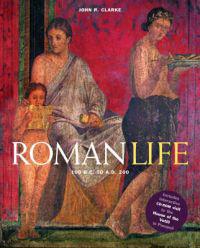
Roman Life: 100 B.C. to A.D. 200 [With CDROM]
ISBN: 9780810993396 - UTGIVEN: 2007-11"Roman Life: 100 B.C. to A.D. 200" vividly re-creates the lives of people in ancient Rome, from 100 B.C. to A.D. 200. Lavishly illustrated, with many photos made especially for this book, it covers religion, work, public entertainment, tavern life, Roman baths, life in the military, banqueting, fune[...]

The Business Of Waste (Inbunden)
avRaymond G. Stokes, Roman Koster, Stephen C. Sambrook
ISBN: 9781107027213 - UTGIVEN: 2013-09-30This book compares the evolution of the household refuse business in Britain and Germany since 1945 in the context of increased waste output and evolving cultural, social, and political attitudes.[...]

Mob Violence in the Late Roman Republic, 133-49 B. C. (Häftad)
avJohn Wesley Heaton
ISBN: 9781258137816 - UTGIVEN: 201110
The Roman History of C. Velleius Paterculus, Tr. by T. Newcomb - Scholar's Choice Edition (häftad)
ISBN: 9781294937869 - UTGIVEN: 2015-02
The Roman History of Ammianus Marcellinus, During the Reign of the Emperors Constantius, Julian, Jovianus, Valentinian, and Valens. Tr. by C.D. Yonge
ISBN: 9781344783750 - UTGIVEN: 2015-10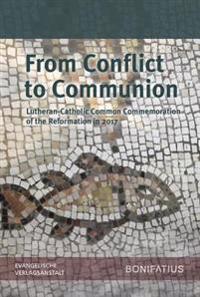
From Conflict to Communion - Including Common Prayer: Lutheran-Catholic Common Commemoration of the Reformation in 2017 Report of the Lutheran-Roman C (häftad)
ISBN: 9783374045693 - UTGIVEN: 2016-07In 2017, Catholics and Lutherans will jointly look back on events of the Reformation 500 years ago. At the same time, they will also reflect on 50 years of official ecumenical dialogue on the worldwide level. During this time, the communion they share anew has continued to grow. This encourages Luth[...]
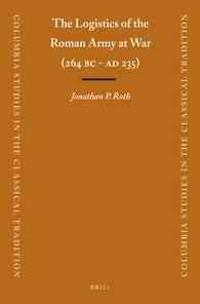
The Logistics of the Roman Army at War (264 B.C. - A.D.235) (häftad)
ISBN: 9789004225473 - UTGIVEN: 2012-05
On the Agora: The Evolution of a Public Space in Hellenistic and Roman Greece (C. 323 BC - 267 Ad)
ISBN: 9789004326712 - UTGIVEN: 2016-12On the Agora traces the evolution of the main public square of the Greek polis for the six centuries from the death of Alexander the Great in 323 BC to the height of the Roman Empire and the Herulian invasion of Greece in 267 AD. Drawing on literary, epigraphic and, especially, archaeological eviden[...]